Synthetic example walkthrough
Run the demo:
uv run python examples/quickstart.py
It generates these files:
examples/output/comparison.parquetexamples/output/latency_vs_capacity.pngexamples/output/required_units_distribution.pngexamples/output/scenario_benefit.pngexamples/output/percentile_tradeoff.png
What the fake workload is doing
The synthetic trace contains three request classes:
chat
rag
reasoning
The optimized scenario applies four changes:
prompt compression
more caching
tighter generation caps
reduced thinking-token budgets
Current synthetic results
examples/output/comparison.parquet is generated directly by the demo and is
the authoritative result table. The command also prints that table for quick
inspection, so no second set of numbers is maintained in the documentation.
Rendered plots
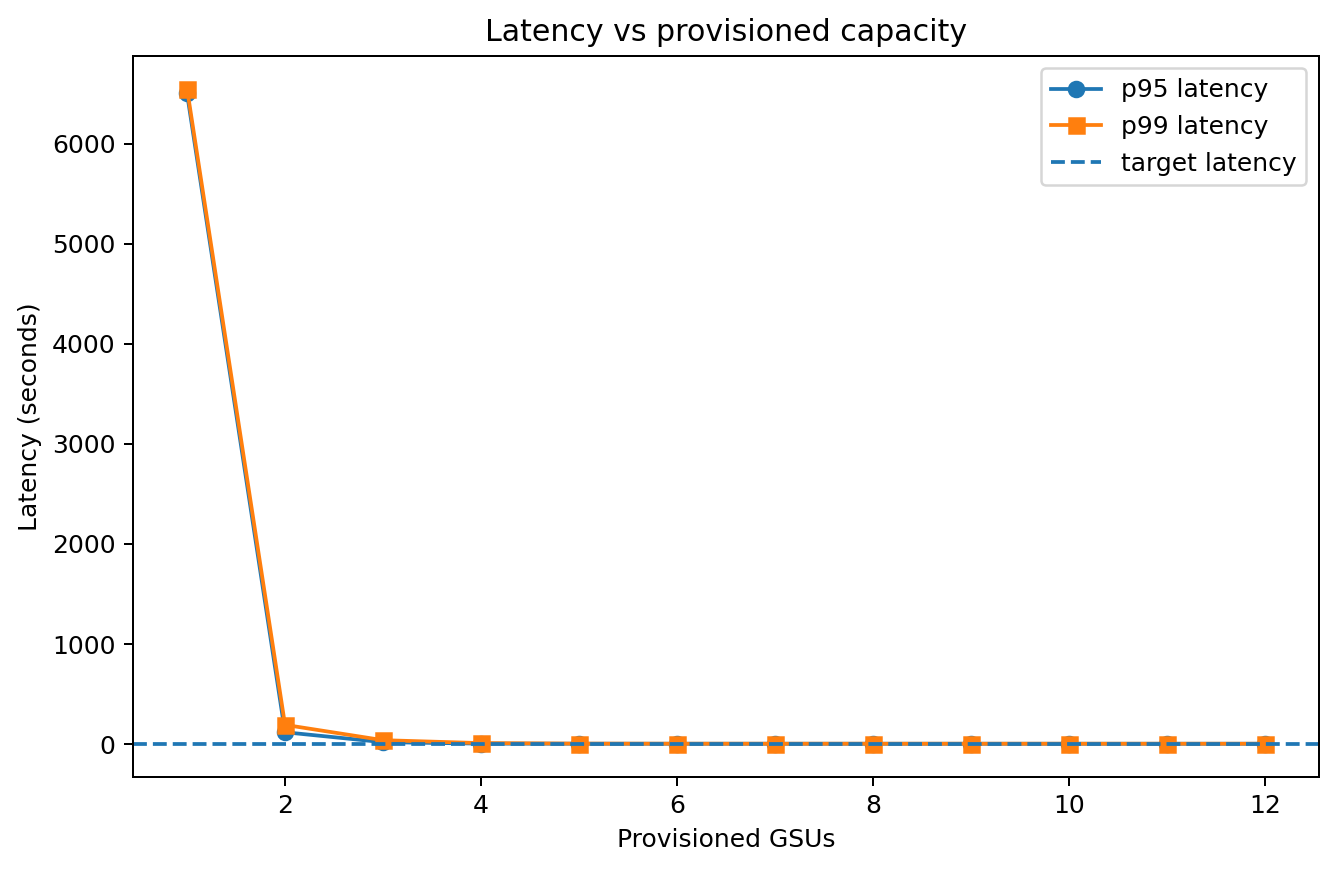
Latency vs capacity
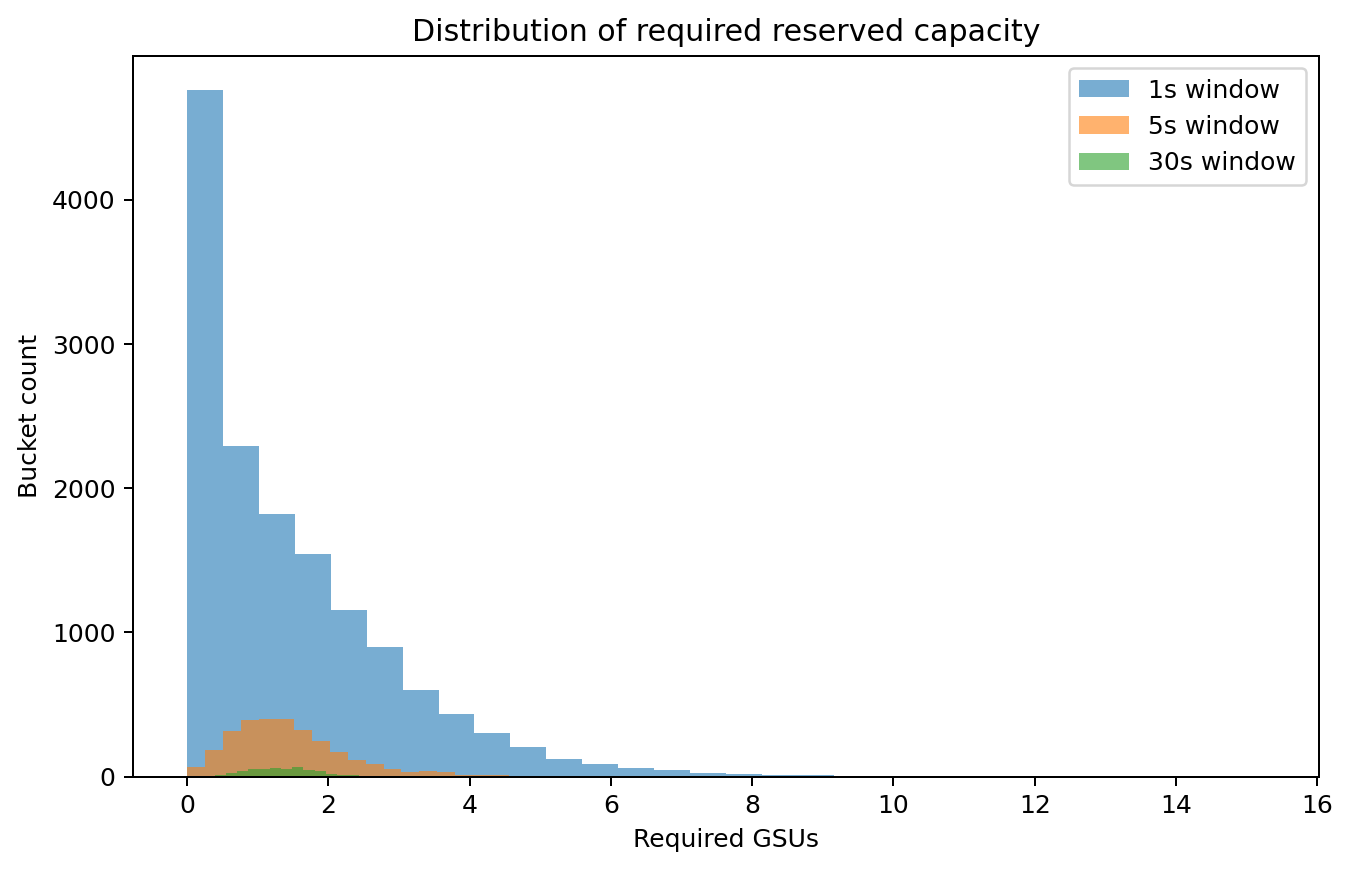
Distribution of required units
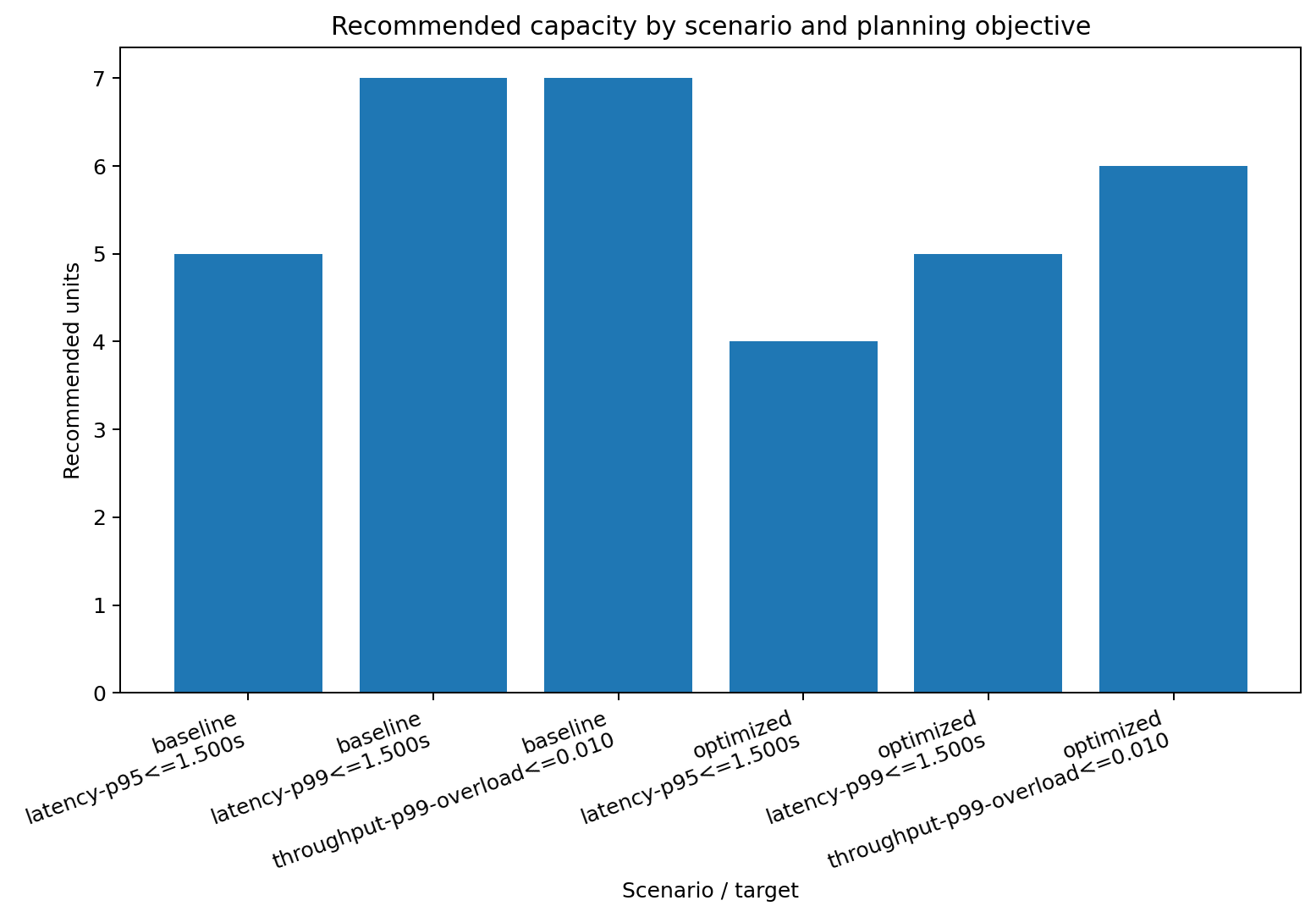
Optimization benefit
Percentile vs slack trade-off
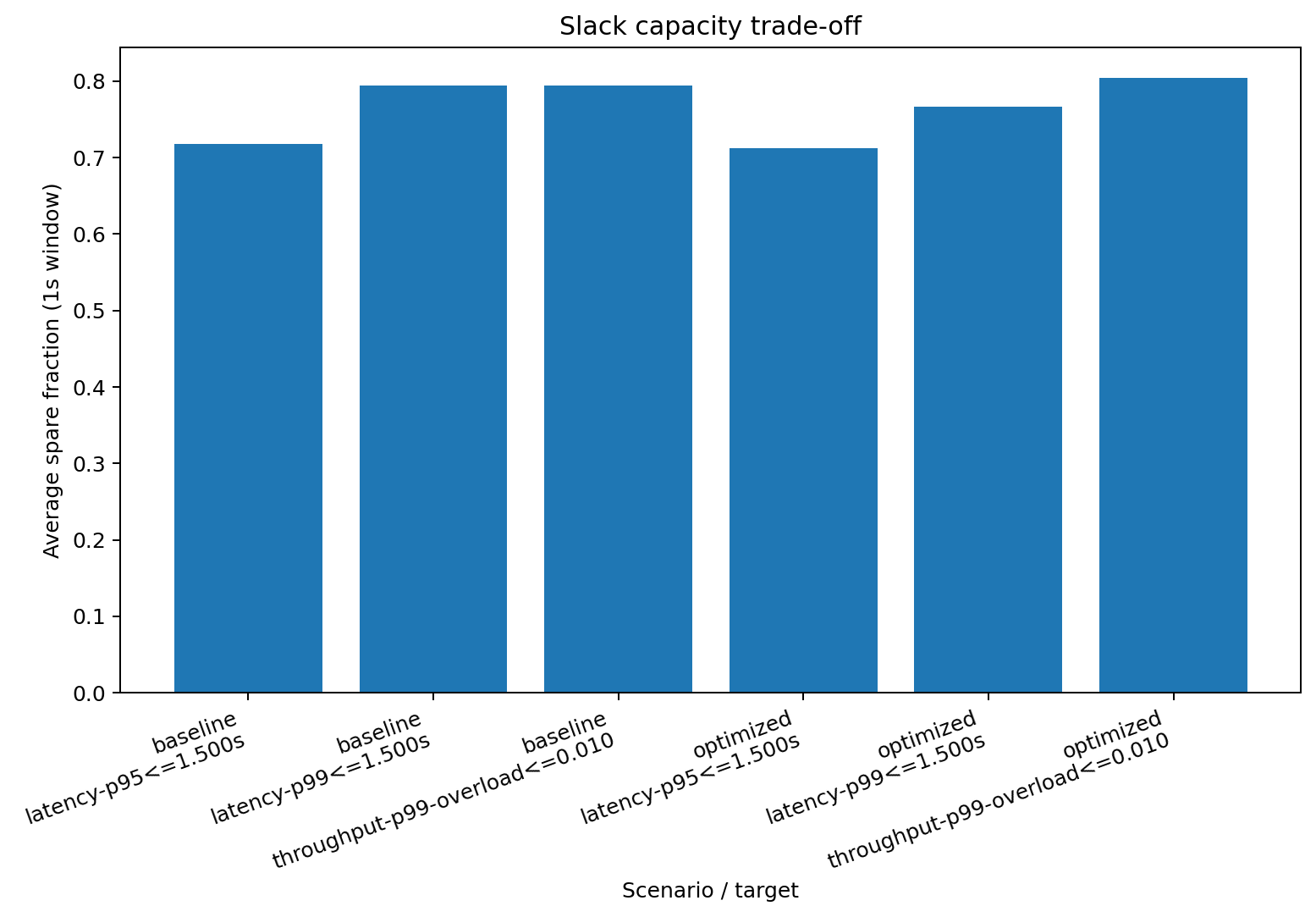
The important pattern is not the exact number. It is that stricter tail planning tends to buy more slack, while prompt/token optimizations can collapse the tail and shrink the reserved-capacity bill.